In a special guest post from DataKind‘s John Harnisher, PhD, read about insights from a featured Stan Jones Stage session at NEXT: The 2025 CCA Annual Convening.
By John Harnisher, PhD, Head of Education Research, DataKind
In higher education, even the most dedicated advisors face the challenge of reaching every student with the right guidance at the right time. AI, paired with data-informed tools, is helping bridge that gap, enabling advisors and institutions to support students more efficiently and equitably.
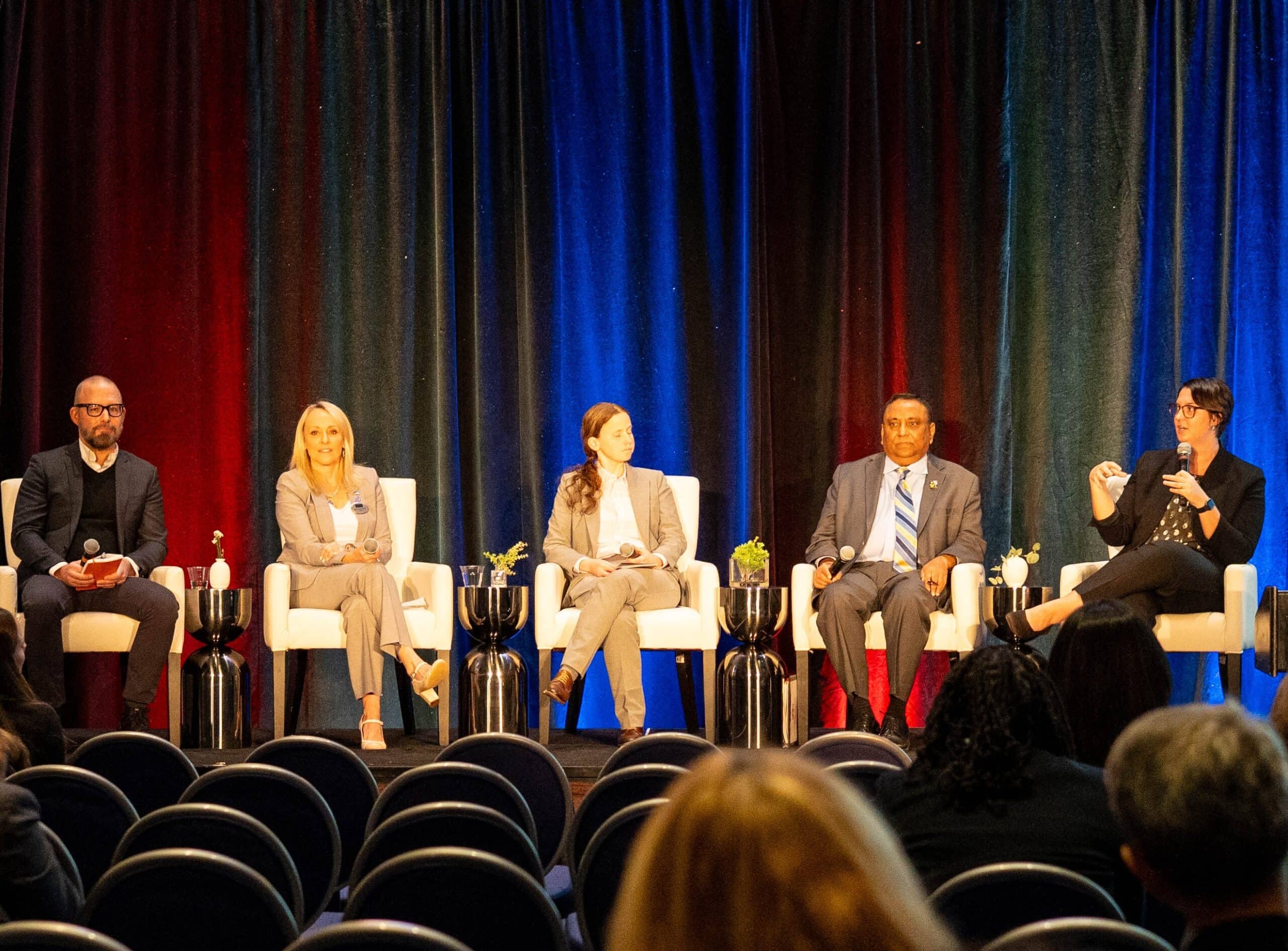
At the 2025 Complete College America Annual Convening in Baltimore, leaders from the Maryland Higher Education Commission (MHEC), Google.org, Wor-Wic Community College, and DataKind took the stage to share how AI-driven tools and cross-sector partnerships are reshaping student success – and offering practitioners a practical roadmap for implementation.

Turning Data Into Action
“Data tells us who needs support before it’s too late,” said Greg Wolniak, PhD, Head of Education Initiatives at DataKind. Through DataKind Edvise, advisors can identify students who need timely support and connect them with the targeted resources. “I’ve spent my career researching student success, and I joined DataKind because the impact of this work is real, scalable, and urgently needed.”
Edvise – supported by $8 million in funding from Google.org and built in collaboration with a team of Google.org Fellows – demonstrates what responsible, no-cost AI can look like when designed for advisor workflows. With expansion underway to 100+ institutions, colleges are increasingly able to act on insights without adding administrative burden.
Maryland as a Leader in Innovation
Maryland’s statewide approach shows how policy, data infrastructure, and institutional collaboration can accelerate results.
“Edvise is a gift to our institutions,” said Sanjay Rai, PhD, Secretary of MHEC. “Maryland continues to pilot and lead in areas like data-informed advising – ensuring every student has a pathway to completion.”
For states looking to replicate success, Maryland’s model reinforces a key lesson: systems-level alignment makes local innovation easier, faster, and more sustainable.
Collaboration as a Catalyst
The panel emphasized that technology alone doesn’t drive change – people and partnerships do.
“Collaboration is what allows innovation to stick. As a comprehensive community college on the Eastern Shore, we can make bold moves because we stay focused on students first,” said Deborah Casey, PhD, President of Wor-Wic Community College. Her team’s experience demonstrates how community colleges can translate predictive insights into meaningful student interventions.
From the philanthropic perspective, Jen Carter, Global Head of Technology at Google.org, underscored the importance of investing in human capacity alongside tools. “We’re not just investing in technology – we’re investing in the educators, advisors, and students who use these tools to unlock opportunity.” She also noted the role of shared data platforms, such as the National Student Clearinghouse, in strengthening institutions’ ability to turn insights into action.
Read more about the DataKind – National Student Clearinghouse partnership here.
Tools, Scale, Impact
The session spotlighted a powerful progression: the right tools enable scale, and scale drives impact. Maryland’s success shows what can happen when statewide leadership, philanthropic support, institutional champions, and easy-to-implement tools work in tandem.
Looking Ahead
The future of student success will depend on responsible, scalable AI paired with strong partnerships. As Wolniak noted, “The goal is simple: ensure every student, in every community, has the guidance and support they need to thrive.”
For practitioners, Maryland’s example offers a clear takeaway: when AI is paired with human judgment and real collaboration, institutions can transform outcomes at scale.
Maryland’s example offers a roadmap for others. Visit CCA’s Amplification Lab to dive deeper into scalable strategies and explore how DataKind collaborates with states and institutions to put responsible AI tools like Edvise into practice. Visit DataKind Edvise or get in touch at education@datakind.org.