
Photo by Allison Shelley/Complete College Photo Library
Few courses shape a student’s trajectory as decisively as the first math course they take in college. For students who place into developmental coursework, or who land in the wrong math pathway for their major, the cost shows up in lost momentum, stalled GPAs, and, too often, departure from college altogether.
So how does an institution actually move the needle on math completion when the work touches every college, every major, and every advising office on campus?
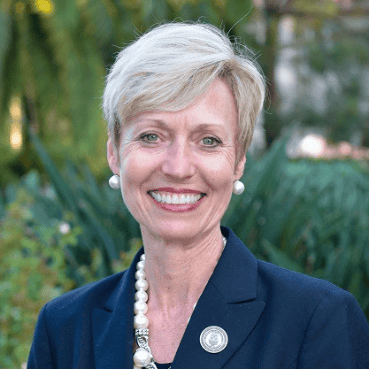
That is the question Dr. Nicole Kotlan, Director of Student Progression in the Division of Management at Kent State University, set out to answer. In an April 2026 CCA Accelerator webinar, Kotlan walked Alliance peers through the math pathways and DFW course review approach taking shape at Kent State, an R1 public research university and one of the largest in Ohio. Her message was practical and replicable: progress on math pathways comes down to two things, university leadership support and evidence-based data. The rest, she said, is about the meetings you organize, the data you put in front of people, and the follow-up you build into every conversation.
Kent State recently pivoted its CCA Accelerator action plan to make developmental education reform a priority focus area, signaling that the institution’s data foundation is in place and the campus is ready to act on what the numbers show. Here is how Kotlan is doing it.
Start with awareness, not action items
Kotlan’s first move was to raise awareness with the people who could move the work forward. She partnered with institutional research to share course completion data with college deans, department chairs/school directors, and directors across campus. “You don’t know what you don’t know,” she said. Most of the chairs hearing the data were not from the math department, but, as Kotlan noted, “most students will take a math course, and how they’re doing in those courses is really important to also communicate.”
Kotlan tells colleagues she is not the data person. Institutional research is. She is the person making sure the data ends up in the rooms where it can change something.
Reframe the data so people see the story
Kotlan reframed how persistence and retention data are presented so the implications jump out. Instead of reporting a single retention rate, she shows three numbers side by side: the percent of students who did not return for spring, the percent who returned for spring but did not return the following fall, and the percent who persisted. “I think it tells a much better story when you’re sharing information,” she said. The framing makes it easier for academic leaders to see that some interventions need to happen earlier in the term, not after a student has already left.
For course completion, she works from a clear threshold. The conversation centers on courses with 75 or more students and a combined D, F, and withdraw rate of 25 percent or higher. She slices the data by section, by modality, and most importantly, by major. The major-level view is where the conversation gets real. “Where I’ve gotten the most traction is showing the majors and their DFW rates,” Kotlan said. In a recent meeting, a major coordinator looking at his students’ performance asked why his majors were taking a particular math course at all. The team pulled up the program’s accreditation requirements on the spot and began discussing a switch to a course where students have a higher success rate.
Build the meeting before you build the plan
Kotlan is intentional about who is in the room. For DFW course reviews, she brings the appropriate department chair or school director, the faculty teaching the highest-volume first-year sections, the college dean, a student success director, the associate provost, the institutional research director, and her counterpart in enrollment management. She has also learned to bring the director of the Academic Success Center, who can speak to tutoring utilization and student-facing supports.
Tone matters as much as attendance. Before meetings, Kotlan reaches out to department chairs/school directors to set expectations. “One thing I didn’t want this to feel like is that they were going to the principal’s office,” she said. “We’re sharing the data. We want to learn what you’re doing. We want to learn how we can help you moving forward so we can help our students complete the courses at a higher rate.”
Every meeting closes with a course plan request. Departments document a goal, a timeframe, a strategy, the responsible party, anticipated challenges, and a start date. The structure ensures the meeting produces a durable artifact, not just a conversation.
Make the data self-service
The capstone of the work is a Power BI dashboard built by Kent State’s institutional research team. Users can filter by course, cohort year, college, and major to view persistence, completion, retention, demographic breakouts, graduation outcomes by entry-level math course, and number of attempts. Kotlan calls the tool “pretty magical.” More importantly, it shifts the institution from a posture of data delivery to one of data access. As Kotlan and her partners refine the completion-rate logic and incorporate feedback from the math department chair, the same tool is being prepared to support reviews of other high-enrollment courses.
What other Alliance institutions can take from this
Kotlan was clear that this work has not been done alone. It has required partnership across academic affairs, enrollment management, student life, and institutional research, and it has been propelled by the support of the math department chair, the college dean, and the associate provost.
For peers across the Alliance considering a similar effort, the practical takeaways are these: start with the data, but make it visual and narrative; bring the right people into the room and prepare them in advance; frame meetings as collaborative problem-solving rather than accountability theater; close every meeting with a written plan; and invest in making the data accessible to the people closest to students.
As Kotlan put it, change does not happen overnight. Creating awareness and helping people understand the impact is what builds the buy-in that sustains the work.
Dr. Nicole Kotlan is the Director of Student Progression in the Division of Enrollment Management at Kent State University, a member of the CCA Alliance and participant in CCA’s Accelerator. She presented this work as part of the Accelerator webinar series in April 2026.