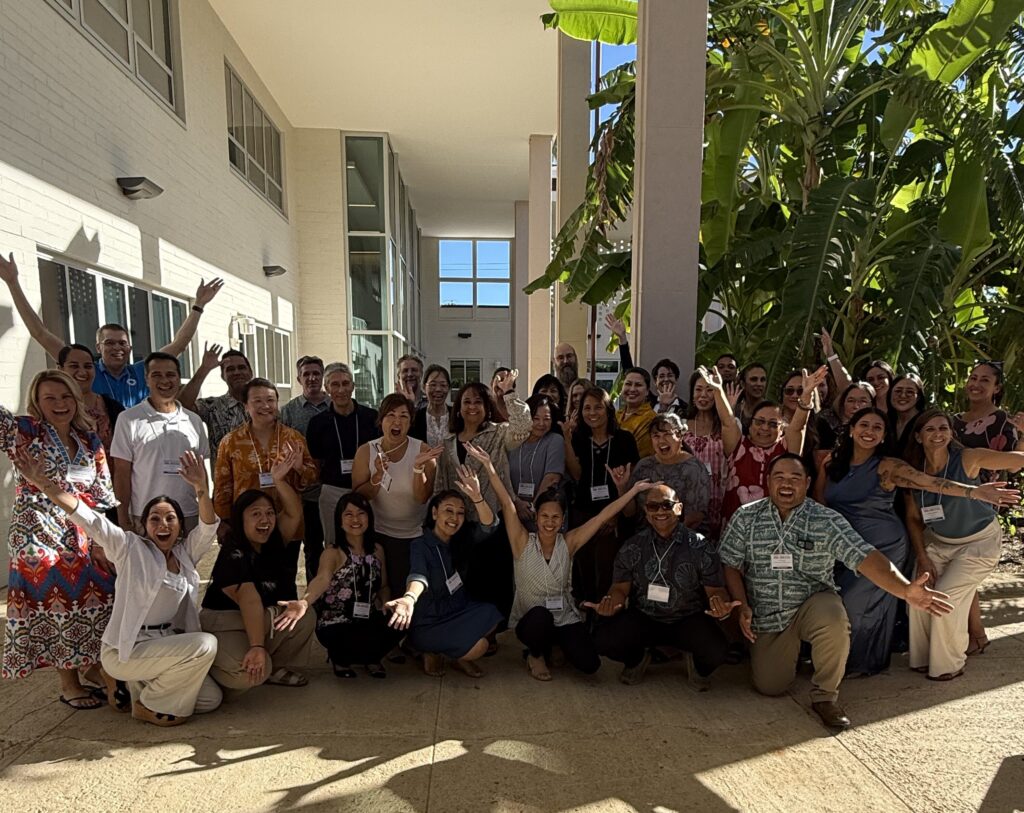
From October 13 to 15, 2026, campuses from across the University of Hawaiʻi system gathered at UH Mānoa for something that is hard to schedule and impossible to replicate over email: three days in one room, focused on one question. How do we make transfer work better for the students who move between us?
The Hawaiʻi Learner Mobility Summit brought together 40 faculty, staff, and leaders from four community colleges, three four-year campuses, and University of Hawaiʻi System offices. Hosted by Complete College America and grown out of our Accelerator work with Hawaiʻi institutions, the Summit combined partnership mapping, data, and action planning. Participants left with two things in equal measure: stronger relationships and concrete commitments.
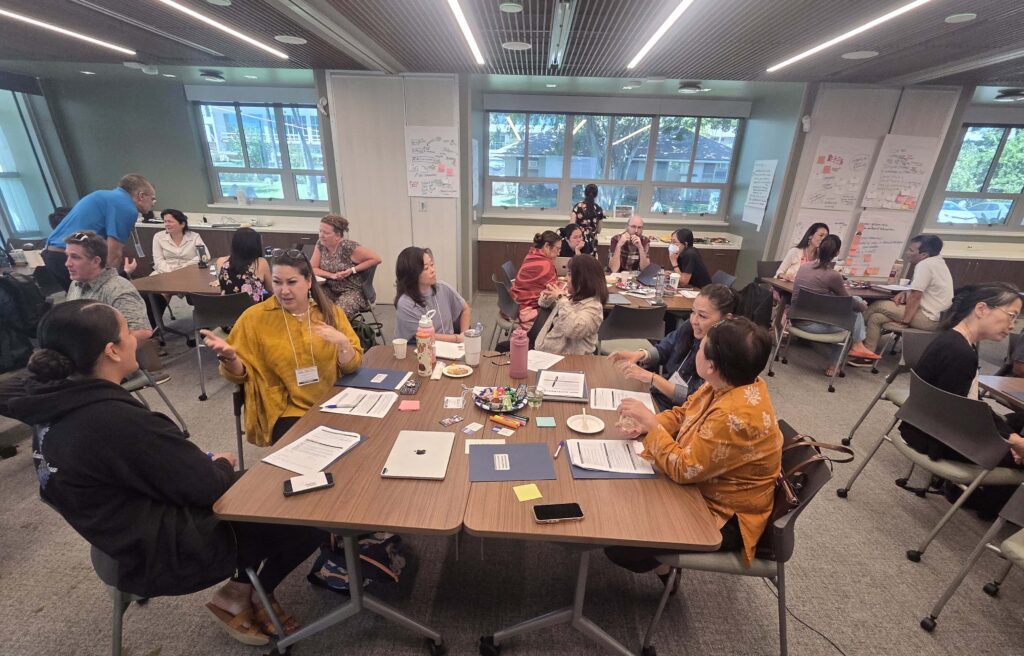
Transfer belongs to everyone.
The University of Hawaiʻi system already has strong transfer policies and technology in place, including auto-admission, the Next Step scholarship, and their STAR platform. The harder work is implementation, which depends on people at different campuses sharing an understanding of what this looks like in practice. That is why the Summit invited the people who carry transfer day to day, from counselors and advisors to deans, institutional researchers, and chancellors.
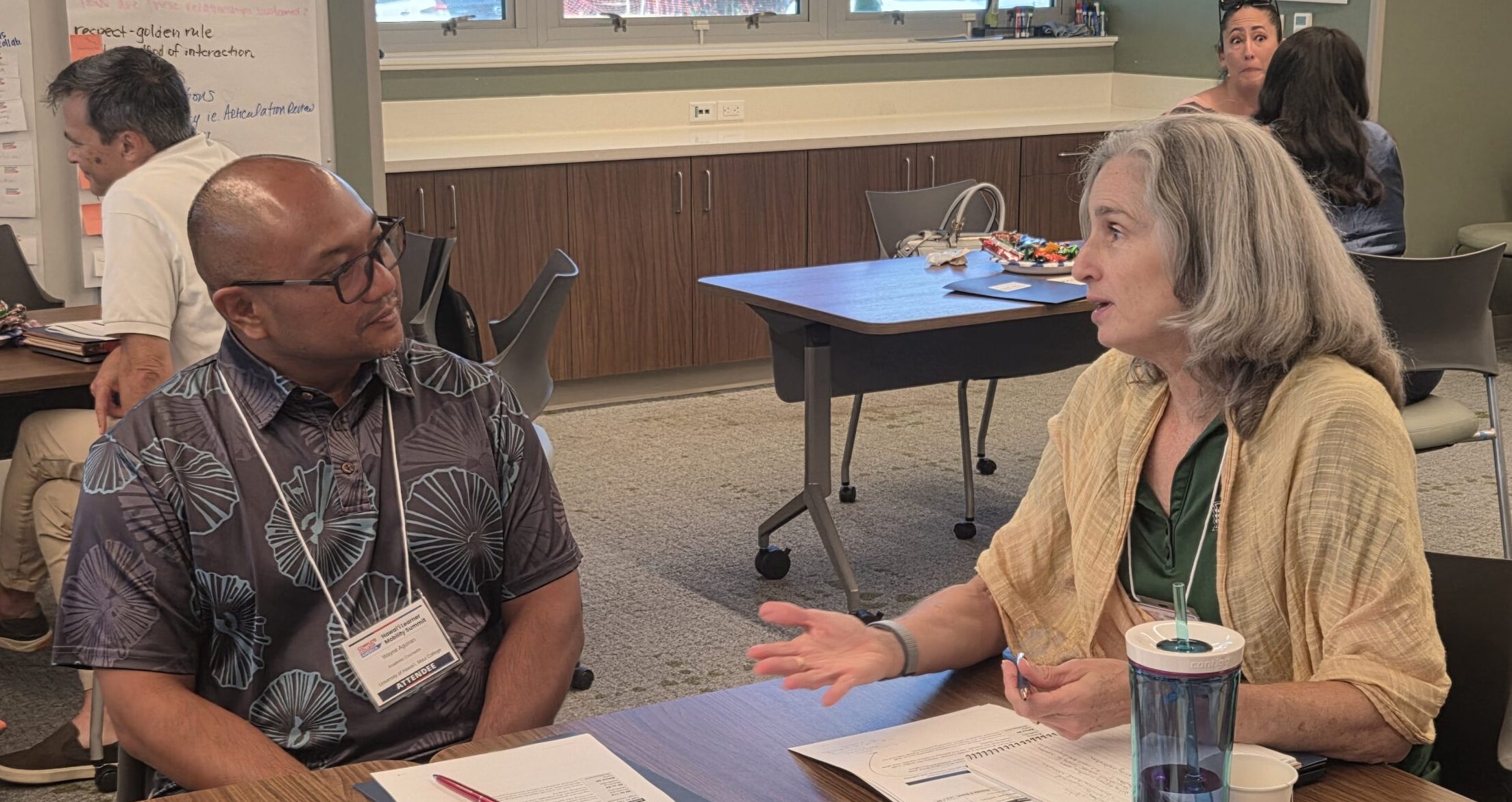
Wayne Aguiran of UH Maui College put it simply: nobody owns transfer alone.
“Bringing our campuses together around transfer was important because transfer is not the responsibility of one department or one campus alone. It is a shared commitment that requires us to look beyond our individual roles, campuses, and processes to see the bigger picture: the student experience.”
Wayne Aguiran, MSW, Professor of Counseling, University of Hawaiʻi Maui College
Three days together gave campuses something they rarely get: dedicated time to focus on how they can work better with one another, and to move from ideas to action.
Relationships are built in the room.
Partners have told us that relationships matter, and that they are hard to build when you are not together. The Summit answered that directly. Campuses spread across multiple islands sat at the same tables, shared what they know and what they only assume, and began to see each other as partners rather than as names on an email thread.
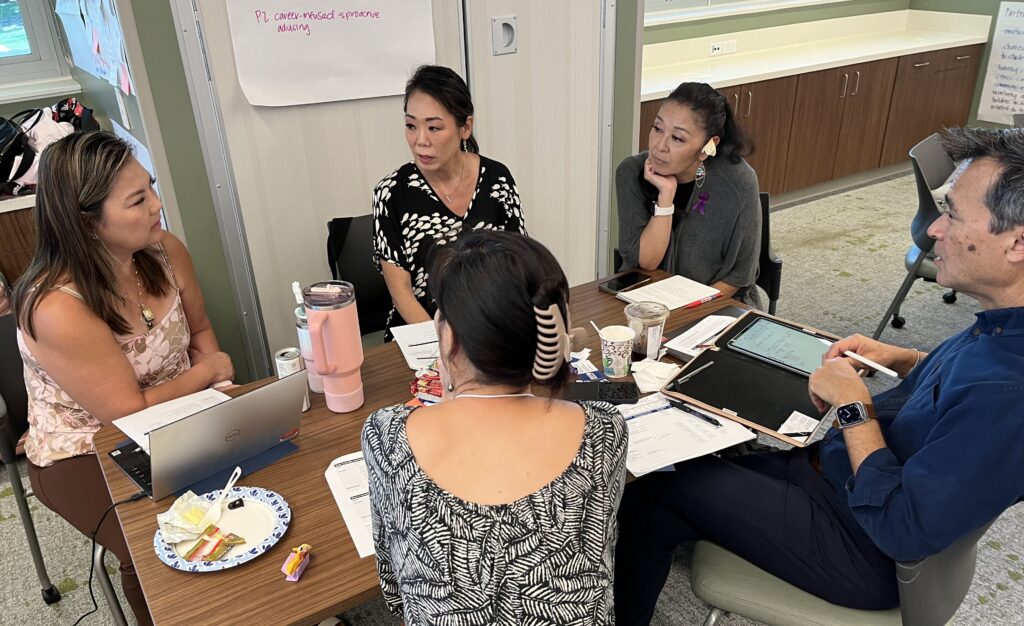
“Strengthening our face-to-face partnerships has been a critical component of this conference. We know that in order to build successful and sustainable practices, especially with cross-campus issues like transfer, we need to have strong partnerships that can withstand uncomfortable conversations and adapt to our ever-changing landscape. This cannot be done on zoom and email alone.”
Sarah Akina, EdD, MSW, Associate Professor and Transfer Specialist, University of Hawaiʻi System
The in-person format mattered most to people who were newer to the system or who knew colleagues only through a screen.
“Since I am in my first year in this position and new to Hawaii, it felt so worthwhile to get out of my office and connect with colleagues. I not only got to know my campus colleagues better, but I also connected with people across UH whom I had only met via email.”
Elizabeth Jach, PhD, Institutional Research and Analysis Program Manager, Kapiʻolani Community College
The energy between two-year and four-year campuses stood out, too.
“I was inspired by the level of energy and engagement between the CCs and the 4-year campuses. It seemed everyone had their sleeves rolled up and were motivated to find ways to improve our student transfer pathways across the system.”
John Ayabe, Associate Vice Chancellor for Academic Affairs, University of Hawaiʻi, West Oʻahu
Data changed the conversation.
Data ran through the entire Summit, and it changed the tone of the conversation. When campuses talk about transfer from experience alone, each one tells a different story. When they look at the same numbers together, from UH system dashboards to National Student Clearinghouse data, they can start from shared facts instead of assumptions and ask better questions of one another. Putting that data on the table also opened up some difficult conversations.
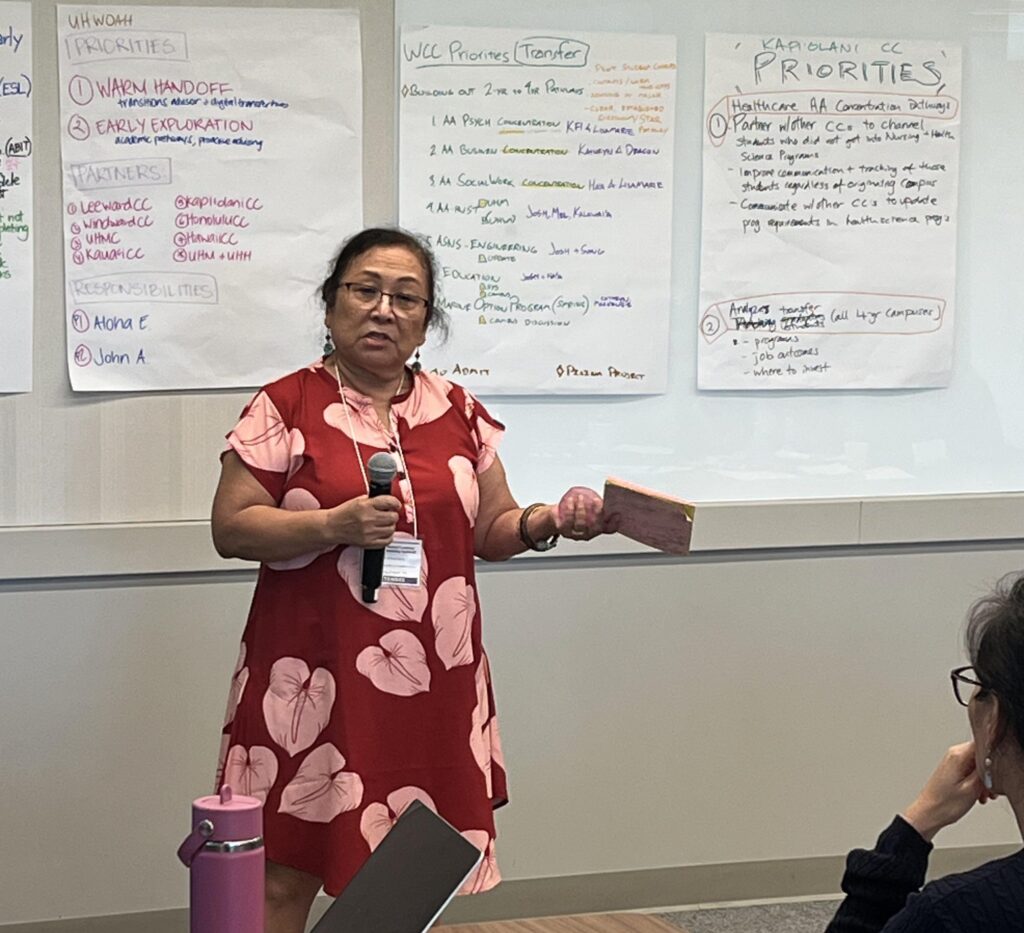
Those conversations took honesty. Participants wrote out the assumptions and perceptions they hear about transfer students and then looked at what UH’s own data says instead. Summer Barrett described the moment that stayed with her.
“Seeing our own data challenge long standing assumptions about transfer students. I was struck by how well community college transfer students perform compared to students who begin at a four-year university, and by the opportunity to openly discuss how faculty at four-year institutions perceive our students.”
Summer Barrett, Interim Dean of Career and Technical Education, Leeward Community College
Starting from shared data changes the question from whose story is right to what partners can do together for students. That shift is what made the commitments that followed possible.
Good intentions became commitments.
Goodwill gets a partnership started. The Summit pushed teams to say what it takes to sustain one. Participants named what they need from their partners: consistent communication and regular contact, reciprocity and equal footing, a dedicated person and a clear point of contact, and the time to act on the plan.
By the final day, teams were building partnership action plans with next steps for the first 30, 60, and 90 days, so the momentum can continue well after the Summit.
The work ahead.
The Summit is a beginning, and the people who know the system best said so plainly.
“The Summit brought up a key component for next steps, that is, to build partnership/relationship between campuses, functions, and people. UH has developed a solid foundation over the years to promote learner mobility, including policy, initiatives, data, and technology infrastructure, and this summit is a timely reminder that we still have unfinished work, and that a new culture and mindset around learner mobility can only take hold if we continue this important work.”
Tao Feng, University of Hawaiʻi System
The next step is follow-through. Teams have plans for the first 30, 60, and 90 days, and CCA is ready to walk alongside campuses as they carry them out.
Mahalo to the campus teams, UH System partners, and content experts who gave their time, honesty, and energy to the Summit. We look forward to the work ahead, to doing it alongside you, and to seeing the impact it will have for students across Hawaiʻi.