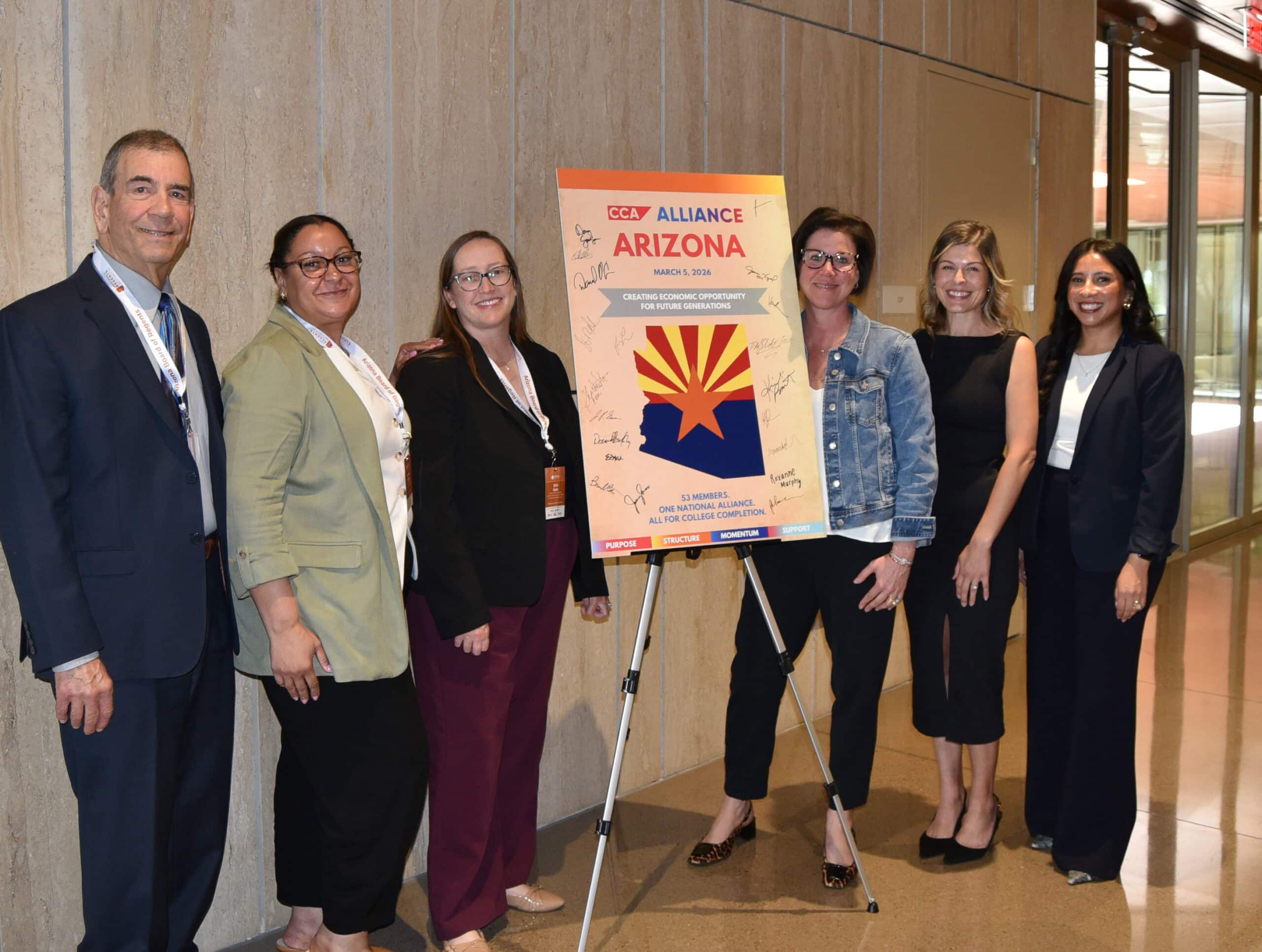
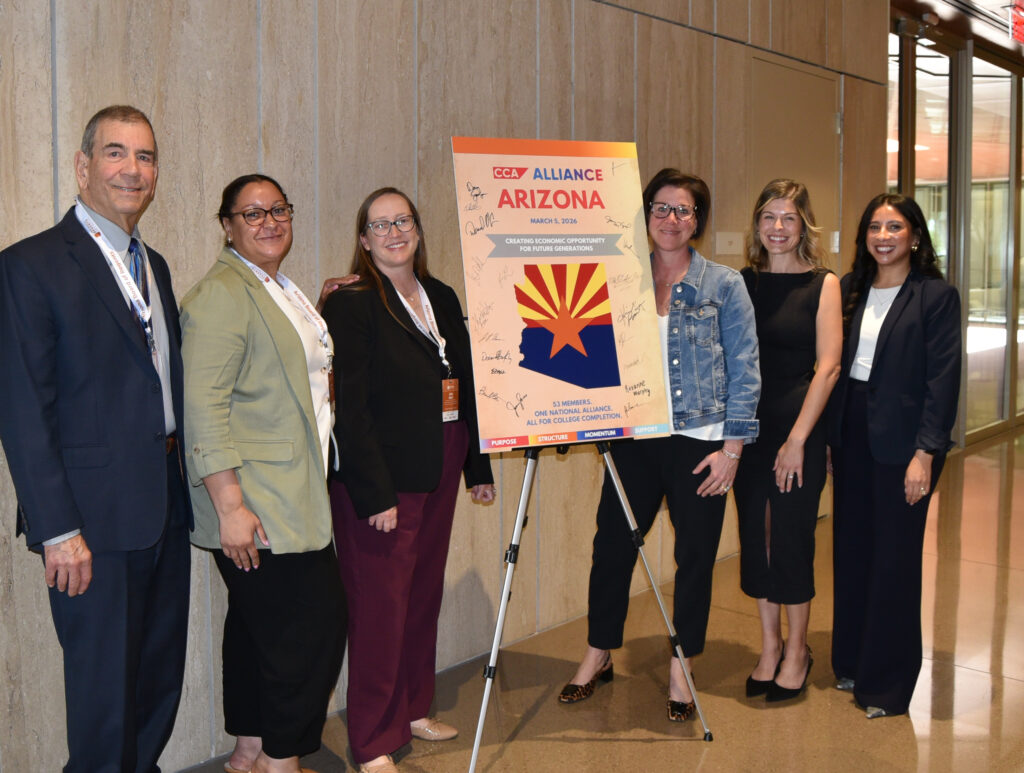
On March 5, 2026, higher education and policy leaders from across Arizona gathered at the Helios Education Foundation in Phoenix to mark a pivotal moment in the state’s postsecondary journey: Arizona’s official launch as a member of the Complete College America Alliance.
Convened by the Arizona Board of Regents and backed by Governor Katie Hobbs’ formal commitment to the initiative, the launch signaled more than a new partnership. It represented a shared declaration that Arizona’s public universities, community colleges, state agencies and community partners are aligned around a single, urgent mission: ensuring more Arizonans earn the degrees and credentials that open doors to economic opportunity.
A state ready to act
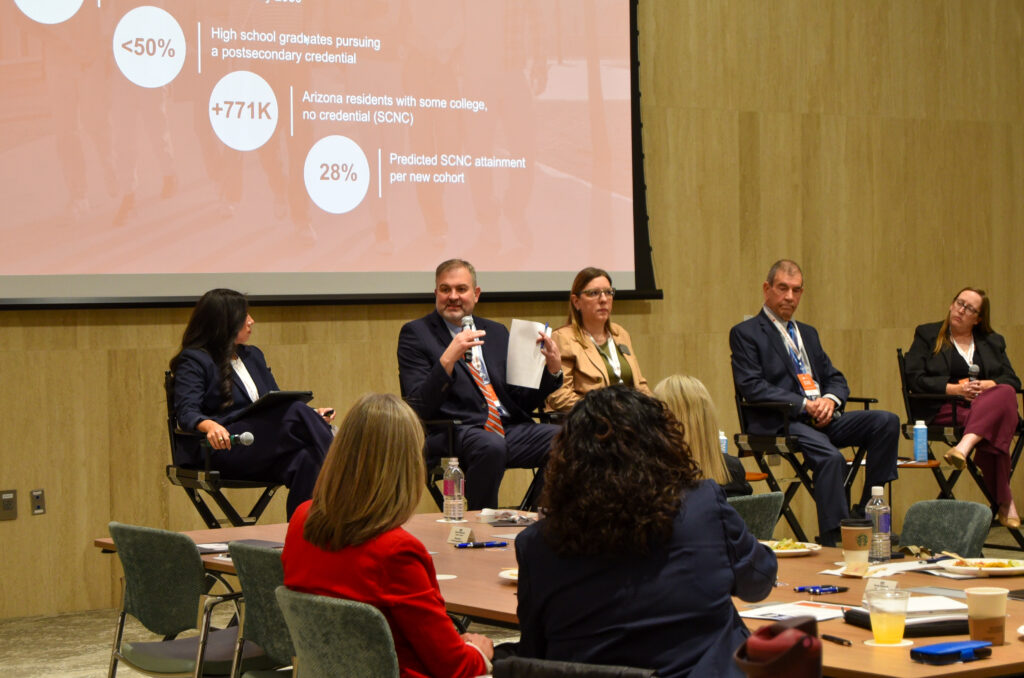
Arizona enters the Alliance at a critical moment. State leaders have set an ambitious goal of equipping 60% of working-age adults in Arizona with education or training beyond high school by 2030. Yet the data underscores the scale and urgency of the challenge.
More than 770,000 Arizona residents have some college credit but no credential, representing a vast pool of untapped talent. At the same time, fewer than half of Arizona high school graduates currently pursue postsecondary education. Looking ahead, workforce projections show that 67% of jobs in Arizona will require a postsecondary credential by 2030, leaving a widening gap between workforce demand and educational attainment.
Behind these numbers are real people: adult learners balancing work and family, returning students seeking a second chance and first-generation college-goers navigating systems not always designed with them in mind. For many, the difference between stopping out and graduating comes down to whether the system is built to support them.
Arizona’s entry into the CCA Alliance signals a statewide commitment to building that system.
Strengthening Arizona’s student success ecosystem
The launch event highlighted several major statewide initiatives already underway: efforts the CCA Alliance will help strengthen, scale and connect.
Re-engaging adult learners: The AZ Comeback Initiative
The AZ Comeback Initiative focuses on the more than 770,000 Arizonans with some college but no credential. These learners have already demonstrated interest in higher education and represent one of the state’s greatest opportunities to expand attainment. The initiative is developing targeted outreach strategies, evidence-based re-enrollment approaches and wraparound supports designed to help adult learners return and complete their credentials. A statewide playbook is also being developed to guide institutions in adopting the most effective practices.
Building seamless pathways: The Arizona Learning Mobility Collaborative
While re-engagement efforts focus on returning learners, Arizona is also building a more seamless system for future students. The Arizona Learning Mobility Collaborative, is focused on ensuring that learning counts, wherever it happens. The collaborative is advancing a comprehensive framework for credit mobility and recognition of prior learning. This includes improving transfer pathways, expanding credit for prior learning and aligning skills and competencies with workforce needs.
Strengthening institutions: The Arizona Community College Success Center
Arizona’s community colleges are also playing a critical role in the state’s attainment strategy. The Arizona Community College Success Center is bringing institutions together to share ideas, collaborate and accelerate improvements in student success. Through professional development and peer learning opportunities, the center equips faculty, staff and administrators with practical tools to strengthen institutional effectiveness and build thriving campus communities.
Connecting education to opportunity
Across these efforts runs a shared focus: ensuring that credentials translate directly into meaningful workforce outcomes. Arizona leaders are exploring opportunities tied to Workforce Pell and other workforce-aligned credential pathways designed to serve working adults, returning learners and underserved communities seeking efficient routes to economic mobility.
Key reflections from the launch
The conversations at the March 5 launch were rich, honest and forward-looking. As the day drew to a close, several themes emerged with particular clarity, insights that extend well beyond Arizona and offer lessons for states and institutions across the country working to improve student success.
Alignment is the foundation.
Across every panel discussion and speaker’s remarks, one message was consistent: meaningful progress rarely comes from launching new programs alone. Instead, it comes from aligning existing initiatives, policies and systems around shared goals. When institutions, state agencies and partners move in the same direction, their collective impact grows exponentially.
Adult learners cannot be an afterthought.
Adult learners represent one of the greatest opportunities to expand postsecondary attainment, but also one of the most complex challenges. Many adults with some college credit did not stop because they lost interest; they stopped because life intervened. Financial strain, caregiving responsibilities, unclear pathways back and systems not designed with working learners in mind continue to create barriers. Any strategy to increase attainment must intentionally address the realities adult learners face and make returning to college both possible and worthwhile.
Credentials must lead somewhere.
Completion matters, but completion alone is not the finish line. The ultimate goal is ensuring that the credentials students earn lead to meaningful outcomes: family-sustaining wages, career advancement and long-term economic mobility. Aligning postsecondary programs with workforce demand and clearly communicating the value of credentials is essential for students, employers and communities alike.
Data must drive decisions and be shared across systems.
Improving student success requires more than collecting data; it requires using data collaboratively. Whether across institutions, systems or sectors, building shared metrics and a common language for measuring progress allows leaders to identify barriers, evaluate what works and scale effective strategies.
Cross-sector trust is a strategic asset.
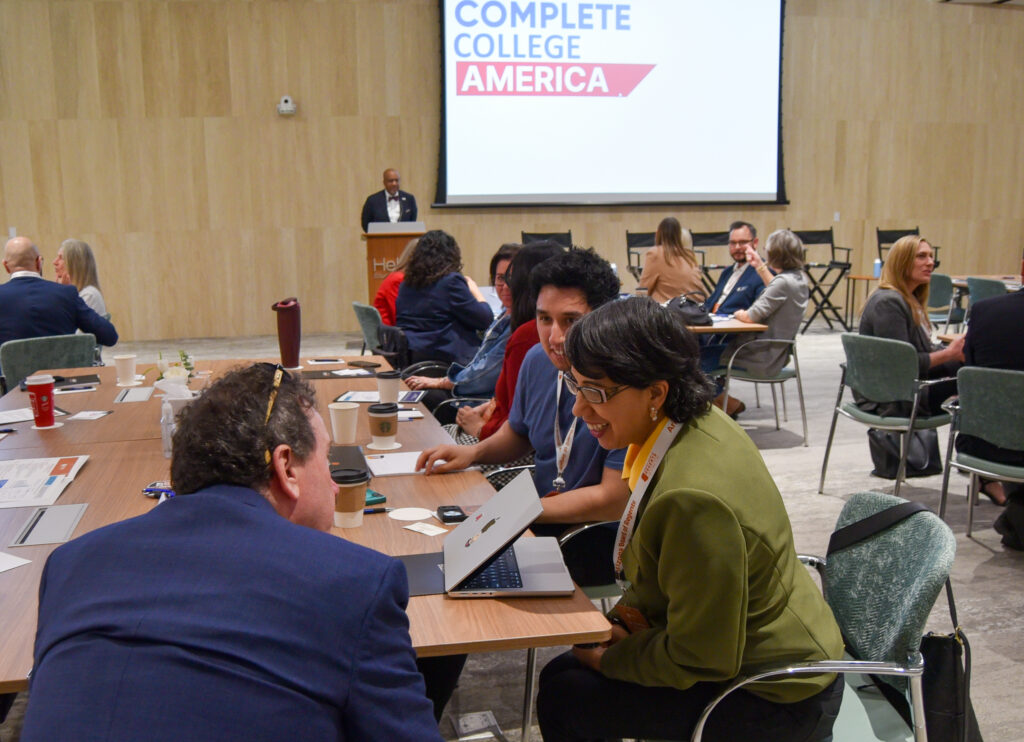
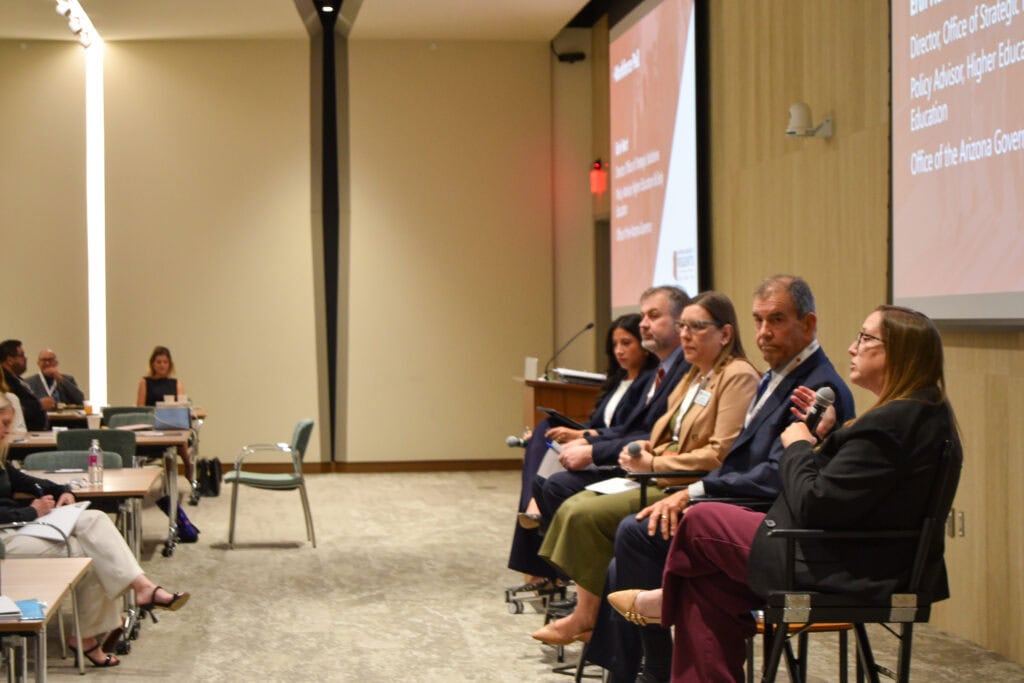
Perhaps the most powerful signal from the launch was the composition of the room itself: leaders from the public universities, community colleges, state government, philanthropy, community organizations and national partners all gathered around a common cause and committed to shared goals. That level of collaboration does not happen automatically—it is built through relationships, transparency and a willingness to prioritize collective outcomes over institutional boundaries.
For Arizona, these themes will guide the work ahead. For the broader field, they reinforce a central lesson of the Complete College America Alliance: lasting progress happens when states align their efforts, share responsibility for outcomes and work together to ensure every learner has a clear pathway to success.